
 Roovet News Media LLC
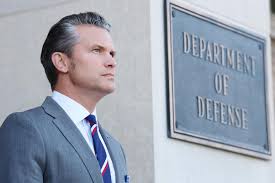
If you were looking for a routine Pentagon update, this wasn’t it. In a move that startled even seasoned defense-watchers, Defense Secretary Pete Hegseth directed hundreds of the U.S. military’s top officers to assemble at Marine Corps Base Quantico next week. The order covers general and flag officers across the services, a cohort that spans global time zones and commands responsible for thousands of troops and billions in equipment. The Pentagon confirmed Hegseth will address senior leaders; it did not say why.
What makes this meeting so unusual isn’t merely its scale but its immediacy and format. Today’s senior-leader engagements often blend secure teleconferences, limited travel, and staggered briefings to preserve operational coverage and reduce risk. Bringing “hundreds” of generals and admirals together, all at once and in person, forces commands worldwide to reshuffle schedules and contingency plans — and invites difficult questions about why the conversation couldn’t happen via SIPR or JWICS.
Scale and Scope
There are roughly eight hundred U.S. general and flag officers across the Army, Navy, Air Force, Marine Corps, Space Force, and Coast Guard. Reporting indicates the Quantico call includes one-star officers and above, plus selected senior advisers — meaning a very large share of that cadre could be on the same base at the same time. That’s not unprecedented in American history, but it is rare in the modern, post-9/11 era.
Why Now?
The lack of a public agenda has created a vacuum that risks being filled by speculation. This much is clear: the order lands amid an ongoing campaign to reshape the senior ranks and tighten top-level governance of the force. News outlets have documented cuts to four-star billets, broader reductions across general/flag officer positions, and a series of abrupt dismissals of service leaders earlier in the year. Supporters call it streamlining; critics see politicization. Either way, it’s the context into which this meeting arrives.
Timing also matters. Defense One, citing the initial reporting, noted that the summons lands “as a government shutdown looms,” a reminder that even if the gathering is unrelated to budget brinkmanship, the military’s planning environment is unusually volatile. That volatility magnifies interest in any senior-leader conclave that could foreshadow decisions on force structure, modernization, or readiness.
The Quantico Factor
Quantico is close to Washington, highly secure, and built to host classified breakout sessions without the optics of a Pentagon auditorium. Marines call it the “Crossroads of the Marine Corps” — a location that pairs capacity with controlled access and, crucially, flexibility for parallel tracks if Hegseth wants service-specific or combatant-command-specific conversations after a plenary address. In other words, if you want to compress months of bureaucratic back-and-forth into a day, Quantico is a practical place to do it. (Context from the base’s mission and facilities.)
What We Know vs. What We Don’t
We know the who (general and flag officers), the where (Quantico), and the when (next week). We don’t know the agenda, whether the White House will participate, or whether a post-meeting readout is planned. Several outlets report the Pentagon confirmed Hegseth will address his senior leaders but offered no detail beyond that. That absence of detail is one reason the order has generated so much attention outside defense circles.
A Pentagon in Flux
This meeting lands alongside a series of structural moves that have kept the Department of Defense — and its relationship with the broader political environment — under a spotlight. Reuters recently reported on a directive to allow “Department of War” as a secondary title in official communications, part of an effort aligned with the administration’s messaging. Symbolism aside, formal renaming would require statutory change; nonetheless, it underscores the degree of top-down steering in the current moment. That steering frames how observers read the Quantico order.
Is There Precedent?
Senior-leader conferences happen. What’s rare is their suddenness and breadth. In the information age, urgent all-hands meetings are typically reserved for moments when face-to-face debate is judged essential — either to settle contentious tradeoffs quickly or to deliver guidance with emotional and institutional weight. The unusual cadence here — short notice, mass recall, in-person only — suggests the goals go beyond routine briefings. (Analytical inference from reported scale and format.)
Potential Motives (Without the Rumor Mill)
• Force Structure: If the department is finalizing guidance on reducing or realigning senior billets, aligning joint boards and service-unique reforms may warrant frank, live conversations. Such sessions can prevent months of churn and mixed signals across commands.
• Readiness and Global Posture: The U.S. military is juggling munitions replenishment, industrial-base constraints, and evolving deterrence concepts in Europe and the Indo-Pacific. Bringing combatant commanders and service chiefs into one room can compress decision cycles and surface cross-theater risks. (Reasoned analysis.)
• Strategic Messaging: Convening “the brass” sends a message to multiple audiences — Congress, allies, adversaries — whether intended or not. Without a readout, allies may worry about discontinuity while adversaries probe for gaps. Transparent follow-through will matter. (Reasoned analysis; timing context.)
Civil-Military Relations Under the Microscope
The U.S. tradition is clear: civilian control paired with an apolitical officer corps. Large-scale recalls of senior leaders, especially when paired with active reshuffling at the top, inevitably draw scrutiny from lawmakers and the public. That scrutiny intensifies when basic details (topic, objectives, expected outcomes) are withheld. It doesn’t mean anything untoward is afoot; it does mean the bar for clear post-meeting communication is higher if the department wants to sustain trust across the ranks and on Capitol Hill. (Synthesis of reporting and long-standing civil-mil norms.)
Operational Risk and Coverage
One practical concern with mass in-person meetings is coverage: who’s on the watchfloor, who owns the red phone, and how rapidly combatant commanders can surge if a crisis breaks while the principals are traveling. The military plans for this; deputies, alternates, and service operation centers exist for a reason. Still, the bigger the meeting, the longer the travel windows, and the more seams there are to manage. That’s part of why security professionals raised eyebrows at the format.
What to Watch Next
-
Agenda Signals: If the Pentagon publishes even a minimal readout — key themes, next steps — it will help calm speculation and steer public understanding away from rumor.
-
Personnel Moves: Watch for follow-on nominations, reassignments, or billet changes over the subsequent weeks. Conferences don’t make policy, but they often align decision-makers ahead of a sequence of actions.
-
Guidance to the Force: Look for service-level memos, ALARACT/ALNAV-style messages, or refined tasking to combatant commands that codify any new priorities. (Process inference.)
-
Congressional Reaction: Oversight letters or hearing requests would signal lingering concerns about politicization or transparency. (Process inference informed by recent coverage.)
A Short Timeline
• Thursday (today): News breaks; Pentagon confirms Hegseth will address senior leaders next week.
• Early next week: Generals and admirals gather at Quantico for the closed-door session(s).
• Post-meeting: Await any readout or guidance memo — the first real datapoint on whether this was about force structure, readiness, or something else.
FAQ
Q: How many officers are affected?
A: Reports reference “hundreds” of generals and admirals, one-star and above, plus staff. That suggests a very large subset of the general/flag community.
Q: Why Quantico instead of the Pentagon?
A: Quantico offers capacity, security, and flexible space for classified breakouts — and avoids the optics of a Pentagon auditorium for a high-stakes, all-hands address. (Context on Quantico’s mission and facilities.)
Q: Is this related to renaming the Department of Defense?
A: Reuters has reported a directive to allow “Department of War” as a secondary title in official communications, with any formal renaming requiring congressional action. There’s no public indication that the Quantico meeting is specifically about renaming.
Q: Couldn’t they do this securely online?
A: Technically yes; that’s part of why the order stands out. Leaders sometimes choose in-person sessions when they want to accelerate consensus, read the room, and underscore the weight of forthcoming guidance.
Analysis: Three Big Buckets
-
Structure: If the topic is senior-rank reductions or billet realignment, expect follow-up memos that re-tier commands, adjust joint promotion boards, and clarify which billets remain four-star. The aim would be to drive agility and accountability — quickly.
-
Readiness: If the focus is readiness and posture, outcomes could include new guidance on munitions stockpiles, rotational presence, and surge timelines in key theaters, plus directives to accelerate industrial-base fixes. (Analytical forecast.)
-
Messaging: If the point is strategic messaging, the meeting itself is the message. In that case, watch for a carefully crafted statement afterward to avoid misinterpretation by allies and adversaries. (Analytical forecast; timing context.)
Why This Matters
Senior officers convert national strategy into executable orders. In a single day at Quantico, Hegseth can align combatant commanders, service chiefs, and key staff on a common framework — from force design to acquisition tradeoffs to training pipelines. That kind of alignment, for good or ill, tends to echo across budgets and deployment plans for months. Put differently: even if the meeting yields no splashy headline, its downstream effects may show up in the day-to-day business of how the U.S. military recruits, equips, trains, and fights. (Synthesis of reporting and established planning cycles.)
Bottom Line
This is a rare, high-density moment for the American military’s top decision-makers. Until the Pentagon shares details, outside observers should resist filling the vacuum with narratives that outpace facts. The key signals to watch are straightforward: whether the department provides a readout, how personnel moves unfold in October and November, and what formal guidance the services issue in the meeting’s wake. If the stated goal is clarity and unity of effort, a little transparency after Quantico will go a long way.