
 Roovet News Media LLC
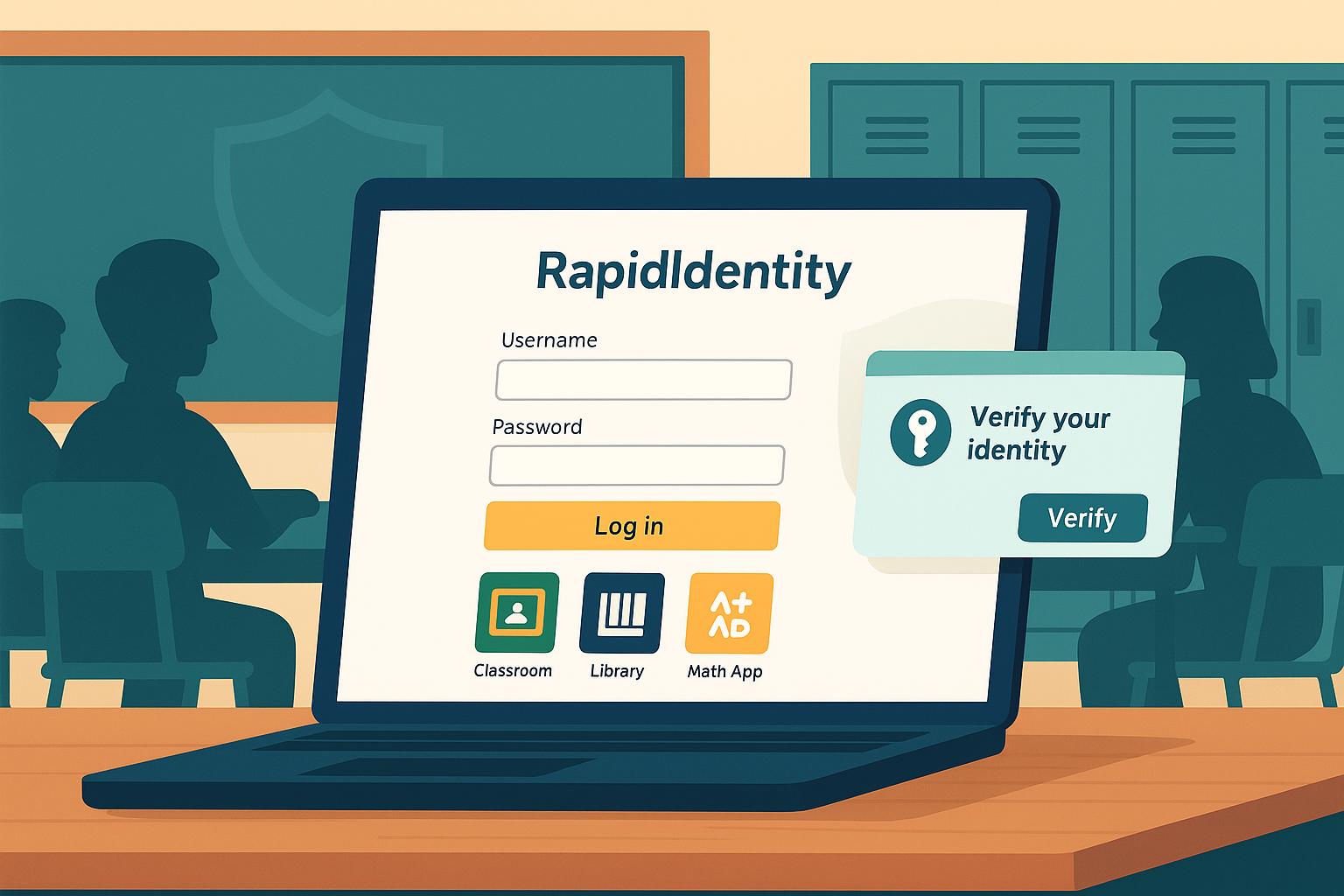
Classrooms today run on passwords as much as on pencils. From math practice to library catalogs to cafeteria payments, everyday learning is stitched together by accounts, roles, and permissions. In that fabric, RapidIdentity has emerged as a defining platform. It is referenced in staff meetings when a student can’t log in, in board presentations about cybersecurity, and in procurement plans that now treat identity as critical infrastructure rather than a side feature of the network.
This report examines why RapidIdentity has become a centerpiece of K-12 IT strategy, what districts actually do with it, where the friction shows up, and how the identity conversation is evolving as schools lean into zero-trust security, multi-factor authentication, and automated rostering. The focus is not on shiny features but on operational reality: the mix of policy, pedagogy, and plumbing required to make digital learning predictable and safe.
The Identity Moment in K-12
Districts are facing overlapping pressures. The number of instructional apps has exploded; student mobility rises mid-year; ransomware has turned networks into targets; and staffing shortages in IT make manual account work unsustainable. The result is a clear mandate: automate everything you can, verify everyone you must, and keep the classroom fast.
In that context, RapidIdentity is not merely a login page. It is a control plane for people, devices, and entitlements. The platform’s appeal is straightforward: unify single sign-on (SSO) with identity lifecycle, group membership, rostering, and policy controls so that teachers can teach without waiting on a ticket, and students can learn without juggling a dozen passwords.
What Districts Actually Use RapidIdentity For
Single Sign-On as the Classroom Front Door.
Teachers expect the first five minutes of class to be about instruction, not passwords. RapidIdentity portals consolidate access: one launchpad, role-aware tiles, and a consistent way to reach learning apps. Young learners can use picture passwords or QR-style badges where policy allows; older students and staff see SSO flows that feel familiar and fast.
Lifecycle Automation for Students and Staff.
The most invisible work in a district is account creation and cleanup. RapidIdentity automates the chore: ingest data from the student information system; create accounts; place users in the right groups; assign licenses; and deactivate accounts when students transfer or staff exit. Nightly roster updates stop being a guessing game.
Rostering and Course Access.
Identity is not only who you are but what you are allowed to do today. With RapidIdentity, class membership becomes a policy input: enrollments generate the right groups, which in turn unlock courseware, class drives, and assessment tools. If a student changes sections at 10:00 a.m., the permissions can follow by lunch.
Multi-Factor and Conditional Access.
Districts are adding second-factor prompts for sensitive workflows: payroll portals, HR systems, special education records. RapidIdentity integrates these checks while honoring the classroom’s need for speed—prompt sparingly, remember trusted devices, and avoid derailing instruction.
Delegated Administration and Auditing.
Central IT can’t do everything. RapidIdentity supports scoped privileges for school secretaries, site techs, or data managers. Every change leaves a trail, making audits and incident reviews tangible instead of speculative.
Self-Service Password and Profile Tools.
When the help desk is swamped in August, self-service matters. RapidIdentity can offload routine resets and profile updates with guardrails that respect age and policy.
Why RapidIdentity Wins Buy-In Beyond IT
For teachers: the login routine doesn’t devour class time.
For principals: new hires are productive sooner.
For parents: one consistent entry point lowers confusion.
For boards: clearer risk controls and auditability satisfy oversight.
For students: fewer passwords and faster access reduce friction that disproportionately affects younger learners and multilingual families.
The platform’s value is cumulative; each automated workflow saves minutes that, across a district, add up to days of recovered instructional time.
The Security Imperative
Cyber incidents changed the tone of procurement. Districts now evaluate tools through the lens of least privilege, segmentation, and verifiable identity. RapidIdentity fits the moment by making identity the policy engine:
-
Role-based access prevents lateral movement when accounts are compromised.
-
Adaptive rules—flagging risky logins or unfamiliar devices—catch anomalies earlier.
-
Central policy reduces the drift that accumulates when each app manages its own user store.
Security is no longer a separate project. With RapidIdentity, it becomes the default behavior of the system.
Implementation: The First 90 Days
Preparation and data hygiene.
Districts begin by reconciling naming conventions, resolving duplicates, and clarifying roles. A clean roster is worth more than any fancy control.
Pilot and phased rollouts.
One school or department goes first. Feedback shapes the launchpad layout, training materials, and password reset processes. Then the district expands in waves.
Professional learning.
Teachers see the portal well before students; they practice with classroom tasks so day one does not feel like an experiment.
Cutover and stabilization.
During the first weeks, support lines spike as old habits meet new flows. Districts that publish short “How we log in now” one-pagers, translated into community languages, report smoother transitions.
Continuous tuning.
The project is never “finished.” New apps arrive, boundaries change, and the RapidIdentity policy set evolves with them.
Classroom Reality: Less Friction, More Focus
When identity works, it disappears. A fourth-grade teacher launches reading groups; students open devices and tap into apps through the RapidIdentity portal. A high school assistant principal deactivates a lost device and resets a student password without escalating a ticket. Special education staff complete paperwork behind multi-factor prompts. The normalcy is the point. Predictable access is an equity tool as much as a technical achievement.
The Hard Parts (and How Districts Navigate Them)
Rostering edge cases.
Mid-year transfers and co-taught sections create timing gaps. Districts mitigate by scheduling multiple daily syncs and giving counselors scoped ability to trigger an immediate update.
App sprawl.
If the portal becomes a wall of tiles, usage drops. Effective teams curate: required apps at the top, grade-level bundles beneath, search for everything else.
Password fatigue.
MFA rollouts provoke pushback initially. Clear messaging (“only for payroll,” “not on student iPads”), plus device trust windows, preserve classroom momentum.
Policy alignment.
Identity touches HR, curriculum, special education, and legal. Governance committees with representatives from each area keep policy consistent and avoid surprises.
Change fatigue.
Summer launches compress testing. Districts that budget time for teacher previews and parent communication outperform those that rush.
Accessibility and Inclusion
RapidIdentity supports accessible logins that align with age and ability: large tiles, high-contrast themes, screen-reader compatibility, and simplified flows for early grades. Districts pair platform choices with human supports, including language-appropriate guides and family workshops. Accessibility is not a toggle; it is planning, testing, and feedback.
Budgeting and Total Cost of Ownership
The dollars are not only in subscription lines. Manual account work costs time; password-reset tickets crowd help desks; lost instructional minutes are pedagogical costs. Districts treating RapidIdentity as infrastructure often reassign staff time from rote account maintenance to higher-value tasks like security operations and data quality. Over a multi-year horizon, ROI shows up as fewer classroom disruptions, fewer incidents, and faster onboarding.
Governance: Who Owns Identity?
The healthiest implementations frame identity as a shared service. IT maintains the platform; HR defines staff roles; curriculum owns app adoption; data governance sets rules for rosters and privacy; principals approve building-level exceptions. RapidIdentity becomes the joint language of that collaboration rather than a silo.
Measuring Success
Districts track indicators such as:
-
Time to onboard a new employee
-
Percentage of password resets handled via self-service
-
Number of applications using RapidIdentity SSO
-
Mean time to provision a new class section
-
Incident response time for account compromises
-
Teacher-reported minutes saved per class period
The pattern is consistent: once identity gets out of the way, technology discussions return to instruction.
What’s Next: The Road Ahead for RapidIdentity in Schools
Passwordless and passkeys.
Younger students and busy teachers benefit from fewer secrets to memorize. Expect RapidIdentity deployments to explore passkeys and device-bound authentication in age-appropriate ways.
Granular, context-aware policies.
Rules that consider time, location, device posture, and risk scores will refine prompts and reduce noise without lowering the bar.
Deeper data integrations.
Identity will inform more than logins—think automatic access to formative assessment dashboards or intervention tools based on role and schedule.
User experience as a security control.
Districts will design portals with behavioral nudges that make the safe path the easiest path—fewer clicks, better defaults, clearer wording.
Privacy by configuration.
Guardrails that minimize data exposure by default, coupled with transparent parent communications, will define the next maturity level.
District Snapshots (Composite Narratives)
Riverview Unified:
A mid-sized district migrated to RapidIdentity before opening a new elementary campus. By automating lifecycle events, the district cut onboarding time for paraprofessionals from three days to one. Teachers reported that the new portal reduced “lost minutes” at the start of class, and principals used delegated tools to handle common fixes.
Highland City Schools:
After a ransomware scare, the board required MFA for finance and HR systems. RapidIdentity integrated those prompts without affecting student devices. Staff skepticism faded when the second factor was limited to high-risk workflows and remembered for trusted machines.
Valley ISD:
Curriculum leaders adopted a standard app review rubric and limited the number of portal tiles per grade band. Usage analytics from RapidIdentity informed renewals—apps that fell below a threshold lost funding, reducing clutter and cost.
These composites illustrate common outcomes: faster access, clearer policy, and measurable time savings.
The Human Side
The best identity projects emphasize relationships. Help desks train student “tech squads.” Family liaisons demonstrate the portal at back-to-school nights. Teachers practice the login routine during professional learning days. RapidIdentity succeeds when it feels like part of the culture rather than a surprise at the start of period one.
Bottom Line
Identity used to be invisible plumbing. In modern districts, it is the backbone of daily instruction and the first line of defense against cyber threats. RapidIdentity has risen because it treats identity as a unified discipline: single sign-on for simplicity, lifecycle automation for accuracy, and policy controls for safety. The payoff is not a prettier login page; it is predictable learning time.
The districts that get the most from RapidIdentity treat implementation as an ongoing practice—governed, measured, and refined—so classrooms remain the quiet beneficiaries of a very busy engine room. When access is reliable and secure, teachers can focus on teaching, students can focus on learning, and technology finally does what it promised: make school simpler.