
 Roovet News Media LLC
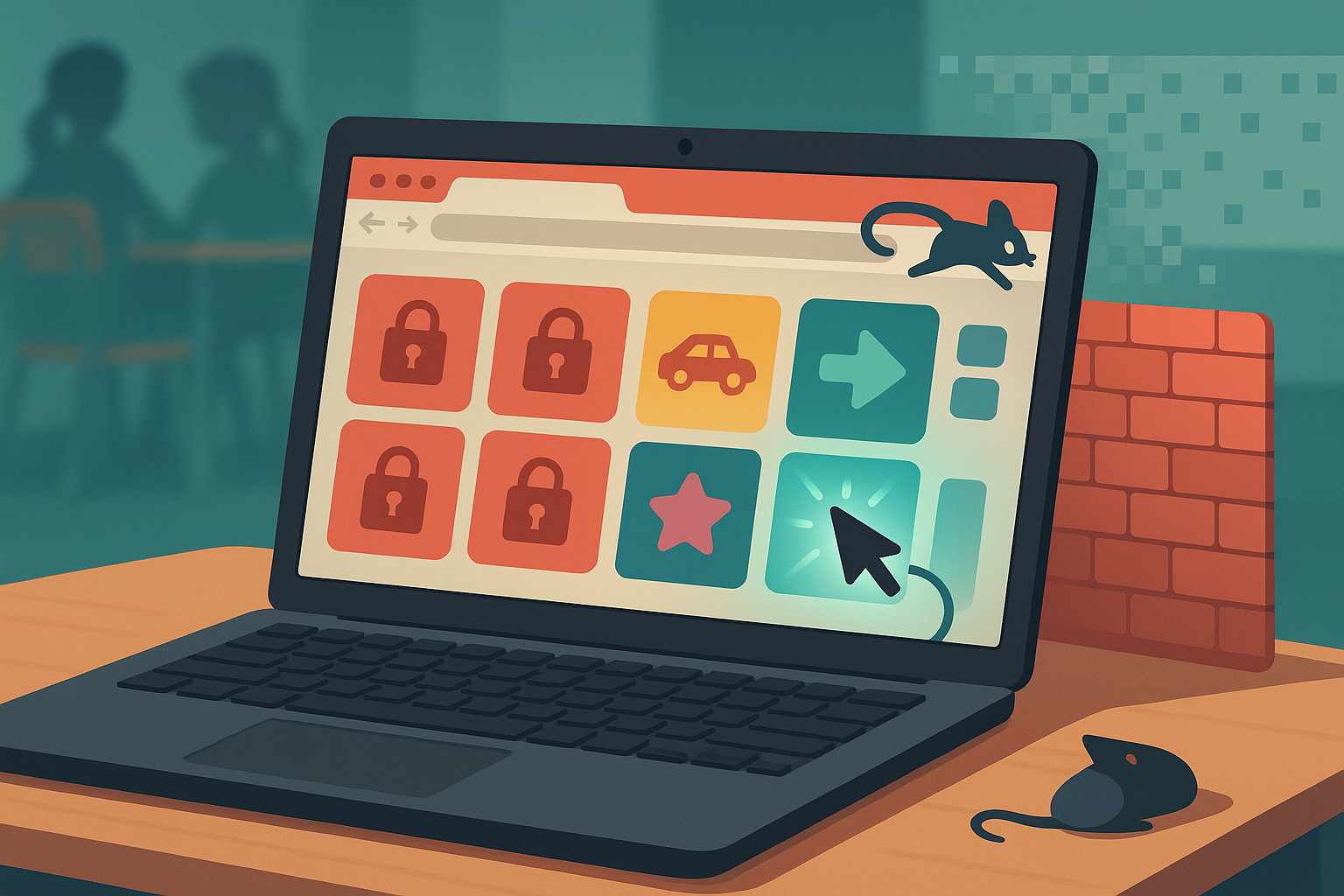
When students whisper about unbanned g+ between classes, they aren’t discussing the long-gone social network. They’re talking about a moving target: a constellation of browser pages and lightweight portals that promise quick access to simple games on school or work devices, even when network filters are in place. The term unbanned g+ has become shorthand for any site that still loads when others get blocked, a flag that says, This one still works. By the time you read this, the specific addresses and names may have shifted. The idea persists.
The spread of unbanned g+ portals is a familiar story with a fresh coat of paint. Schools deploy filtering, administrators set rules, and students experiment until they find the sites that slip through. These pages change location frequently, often hopping across benign-looking subdomains, mirrored pages, and alternate hostnames. The result is a perpetual cat-and-mouse game in which unbanned g+ is less a single destination and more a label for whatever happens to evade the block list this week.
This article unpacks how unbanned g+ caught on, why it’s proliferating, what risks and misconceptions surround it, and how educators, parents, and IT teams can respond without turning classrooms into walled gardens or leaving students to fend for themselves. It’s a story about technology, attention, and the creative energy of young people, as well as a reminder that blunt instruments rarely solve nuanced problems.
What “unbanned g+” actually is
The phrase unbanned g+ is not a brand with a single owner. It’s a catch-all students use for sites that provide access to quick, browser-based games—usually simple HTML5 titles that run on nearly any laptop or tablet. The “g+” bit lingers from the era when “+” signified a hub or collection, and because variants of the name float around in school communities. The essence is consistent: a hub that appears to be “unbanned.”
These unbanned g+ pages blend three traits:
-
Low friction. Games load instantly in the browser, often with one click, without logins or downloads.
-
Domain agility. When one URL gets blocked, a mirror appears elsewhere with the same look and feel, making unbanned g+ feel like a traveling carnival.
-
Legibility for students, opacity for filters. Hostnames and page titles may look generic or educational at a glance, buying time before admins notice traffic patterns.
Students share unbanned g+ addresses the way earlier generations passed around cheat codes or mixtapes: quietly, in group chats, or hidden in homework folders. The name travels faster than any particular link, so the phrase becomes the product.
Why it’s spreading now
Three forces gave unbanned g+ the oxygen it needed.
Chromebook ubiquity and browser parity. The modern classroom device is a web browser with a keyboard. HTML5 and WebGL games run well enough on low-end hardware, which means unbanned g+ portals offer a buffet that feels native to the device. No admin privileges required.
Post-pandemic digital fluency. Students grew comfortable switching tabs, managing extensions, and navigating settings during years of hybrid instruction. That comfort extends to trying a second or third address when the first one stops working. A small skill-curiosity loop—What else works?—propels discovery.
Content filters tuned for yesteryear. Filters do a good job blocking known gaming sites and obvious keywords. They struggle with generic hosting, mirrored pages, and changing subpaths. Unbanned g+ thrives in the gray zone where content looks innocuous until it becomes popular enough to attract attention.
How the portals actually work
The mechanics are simple but effective. A typical unbanned g+ page is a directory of links and embedded games. The host might be a generic site builder, a personal page on a reputable platform, or a lightweight custom domain. The games themselves are often openly available on the web, repackaged in a tidy grid with thumbnails. Ads may appear around the edges, and occasionally there are pop-ups that redirect to other mirrors if the main page goes down.
There’s rarely a login, which keeps friction low but also strips away persistence and safety features. Progress is stored locally, if at all. When a page is blocked or its hosting account is suspended, a copy pops up elsewhere, sometimes with a short-lived name, sometimes under the broader unbanned g+ umbrella. From the student’s perspective, it feels like whack-a-mole in reverse: new moles keep appearing to be whacked by filters later.
The student view: five minutes of fun in a high-signal day
Students don’t need an explainer to understand the appeal. A round of a puzzle or platformer fills the gap between assignments. It’s also social capital. Knowing the latest working unbanned g+ address makes you the person people message during study hall. The culture around unbanned g+ is part scavenger hunt, part inside joke.
There’s also an element of self-direction inside the rule-bending. Students curate small lists, trade recommendations, and tinker with browsers to make the games feel smoother. That doesn’t negate the downsides—lost focus, sneaky behavior, and the occasional inappropriate ad—but it does explain why blocking alone can feel like whack-a-mole without end. The draw is not only the game; it’s the shared discovery.
The IT and administrator view: policy meets physics
Network administrators live with constraints. Filters operate on categories, URL lists, and sometimes machine-learning classifiers, all of which have to balance false positives and negatives. If a host also serves legitimate content, a blanket block can break classroom resources alongside unbanned g+. If the block list is too permissive, students exploit the gaps within days.
The operational math is unforgiving. A single popular list of unbanned g+ mirrors can spawn dozens of look-alikes. Distinguishing a student’s tab with a math game that’s part of the curriculum from an identical-looking puzzle on an unbanned g+ page is technologically nontrivial. Context matters, and most network tools don’t have reliable in-page context. The result is a pragmatic stance: tighten what you can, monitor trends, educate students, and avoid blunt measures that create more collateral damage than benefit.
Myths and misconceptions around unbanned g+
Myth 1: “Unbanned g+” is a single official site.
Reality: It’s a floating label for whichever portals haven’t been blocked yet. Treating it as one entity underestimates how quickly mirrors proliferate.
Myth 2: “Unbanned g+” equals a VPN.
Reality: These are just web pages with games. They don’t tunnel traffic or hide activity the way privacy tools do. Filters can and do catch them; they just reappear elsewhere.
Myth 3: If it loads at school, it must be safe.
Reality: “Loads” only means “not yet blocked.” The safety profile ranges from harmless to sketchy, especially when ad networks or redirect chains are involved.
Myth 4: Blocking every instance solves the problem.
Reality: Blocking slows the spread but doesn’t address the incentives. Students will seek novelty and short breaks. Without guidance and alternatives, the cycle restarts with new names.
The risk profile: not just distraction
Distraction is the headline issue, but unbanned g+ carries additional risks administrators and parents should weigh.
Malvertising and redirects. Some hubs use aggressive ad networks. Mis-clicks can trigger redirects to unrelated pages or attempts to install extensions. Even when nothing malicious happens, the experience can become a jackpot of pop-ups.
Impersonation and copycat pages. Because unbanned g+ is a phrase rather than a brand, opportunists create look-alike sites that harvest clicks. Students can’t easily tell which mirrors are clean and which are not.
Data collection and fingerprinting. Many portals include third-party scripts that hoover up analytics. That data may be innocuous, but on shared devices it complicates privacy expectations and can muddy the browser’s security posture.
Normalization of evasive behavior. Sneaking around filters can erode trust and set a habit pattern that follows students into other corners of the web.
The economics fueling unbanned g+
There’s money in attention, even when each visit is only a couple of minutes. Operators of unbanned g+ portals earn small sums through display ads, pop-under inventory, or cross-promotion of other sites. Mirroring content costs little; the catalog is usually built from games that already exist across the open web. Because the content is interchangeable, operators prioritize resilience over originality. If a portal gets blocked, a new one with the same name and a different subdomain can be booted up quickly.
This economy explains the name’s stickiness. Unbanned g+ is SEO-friendly, easy to remember, and flexible enough to attach to any mirror. The phrase itself becomes an asset shared in chats and short videos, which in turn drives more searches and more copycat pages. The most valuable commodity is not the code; it’s the label students type when they’re bored.
Why blanket blocking backfires
“Block everything that looks like unbanned g+” feels like a clean solution, but real classrooms live with edge cases. Over-blocking can break teacher portfolios, student projects hosted on generic platforms, or the documentation pages for legitimate tools. When a district blocks too broadly, teachers end up asking IT to “temporarily allow” a resource five minutes before a lesson, which is a recipe for frustration on all sides.
The goal is not perfect prevention; it’s a stable environment where teaching time isn’t consumed by cat-and-mouse. That means tighter monitoring where it counts, targeted blocks as patterns emerge, and clear norms for device use. It also means offering healthy outlets for the same impulses that send students to unbanned g+: curiosity, social sharing, and short bursts of play.
What works better than whack-a-mole
1) Teach the why, not just the no.
Students are more likely to comply when they understand stakes: privacy trade-offs, malvertising risks, and how redirects can lead to places no one intended to go. A brief “web hygiene” mini-lesson beats a silent block page.
2) Designate play windows and approved libraries.
Short, scheduled breaks with a vetted game list can transform unbanned g+ from an adversary to a teachable moment. Educational titles scratch the same itch without the sketchy ad stack.
3) Use layered filtering.
Combine DNS filtering, category blocking, and browser policy controls. Each layer catches different things, and together they reduce the odds of a runaway trend.
4) Watch the browser, not just the network.
Policies that limit unknown extensions, block pushy notifications, and restrict installation permissions blunt the worst behaviors, even if a portal loads.
5) Keep the community loop tight.
Make it easy for teachers to report “this page just exploded in my class” and for IT to publish updates. A living FAQ demystifies decisions and builds trust.
The workplace angle: not just a school story
The phrase unbanned g+ also shows up on corporate help desks. Employees use the same trick during long meetings or on locked-down laptops: a lightweight portal that loads quick games without downloads. The calculus differs—adults are responsible for their time—but the technical dynamics are identical. Corporate IT addresses it with acceptable-use policies, application control, and network monitoring, while managers set norms for downtime. The shared lesson is that attention is a currency; systems will evolve anywhere that currency can be spent.
How the name keeps mutating
Every time “unbanned g+” appears in a chat or search bar, it picks up new meanings. For some, it’s a synonym for “unblocked games.” For others, it’s a specific page that worked last month. The ambiguity serves the phenomenon. When a page dies, the name lives on as a beacon: search it, ask a friend, find the next link. That’s why arguing over the “real” site is less productive than addressing the incentives that keep the name alive.
The plus sign, meanwhile, taps into a broader cultural memory: platform “pluses,” premium tiers, and legacy names that suggest collections. The label feels familiar and nonthreatening, which buys it a few extra hours each time it reappears under a fresh subdomain.
The ethical middle path
It’s tempting to polarize the conversation: either clamp down hard or shrug and let it ride. A more useful frame is to separate behaviors into three buckets.
-
Healthy: Short brain breaks on approved resources; games integrated into lessons; student-led curation under teacher oversight.
-
Risky: Visiting unbanned g+ mirrors with aggressive ads; installing unknown extensions to “make it work better”; sharing evasive tips.
-
Harmful: Circumventing device policies; exposing classmates to inappropriate content; normalizing deception.
Schools can champion the first, teach the pitfalls of the second, and clearly prohibit the third. That requires a little empathy and a lot of clarity. Students respond to both.
A day in the life: how unbanned g+ plays out in practice
Picture a middle-school class on a rainy Thursday. The teacher gives ten minutes for independent reading after a quiz. A student finishes early, whispers to a friend, and a familiar chain reaction begins: a quick search for unbanned g+, a click to a mirror that looks like a study hub, a grid of colorful tiles. The game loads and runs in a small corner of the screen. Another student leans over, asks for the link, and passes it to a group chat. Within minutes the teacher notices a pattern—eyes darting to the lower right—and calls for screens at half mast. The spell breaks. After class, the teacher drops the URL into a reporting form. By the last period, the page redirects to a block notice. The next morning, a different mirror appears with a nearly identical layout.
No villainy, just human attention doing what it does. The solution isn’t to roll the clock back to 1995; it’s to bring students into the conversation about how to use powerful tools well.
Guidance for parents and guardians
-
Talk, don’t just toggle. A family discussion about unbanned g+—what it is, why it’s appealing, and why it’s not always safe—does more than an app block that can be sidestepped on a school device.
-
Ask about norms at school. If teachers allow short play breaks with approved resources, reinforce that at home. Consistency reduces the thrill of rule-bending.
-
Model healthy breaks. Show what it looks like to step away from screens or use them with intention. Students take cues from adult attention patterns.
-
Stay curious. When a child brings up unbanned g+, ask what they like about the games rather than leading with a lecture. Curiosity opens doors that rules alone can’t.
Guidance for teachers and librarians
-
Frame digital literacy as empowerment. Teach students to recognize manipulative design, dark patterns in pop-ups, and why a site with 15 “Play Now” buttons isn’t a good idea.
-
Use the phenomenon as a lesson. Compare a vetted educational game to a random unbanned g+ title. What’s different in the ads, the loading, the permissions?
-
Coordinate with IT early. Share trends before they become disruptions. A short note—“I’m seeing unbanned g+ pop up again in Period 3”—helps the whole system.
-
Offer choices. “When you finish, pick from these three approved activities” gives the same autonomy without the roulette wheel of mirrors and redirects.
Guidance for IT administrators
-
Establish a lightweight, fast reporting loop. Make it one click for teachers to report a URL. Respond publicly with brief notes so staff see progress.
-
Tune policies on the browser level. Lock down unknown extension installs and notification prompts, and limit the ability to bypass safe-browsing warnings.
-
Adopt a layered block strategy. Mix category filters, threat intel feeds, and manual lists. No single layer will keep pace with mirrors; together, they’ll reduce noise.
-
Measure outcomes, not just blocks. Track classroom time reclaimed and teacher reports per week, not just the number of domains blocked. The goal is teaching time, not a trophy block list.
Why unbanned g+ won’t disappear—and why that’s okay
There will always be a new name, a new mirror, a new page that someone passes between desks. The persistence of unbanned g+ is a feature of the open web: low friction, easy publishing, quick remixing. That persistence isn’t a reason to abandon filters; it’s a reason to set more realistic goals. The target is not total eradication. The target is a school day where learning wins the attention contest most of the time and where students get just enough sanctioned play to make the rest sustainable.
If anything, unbanned g+ exposes a larger opportunity. Students are hungry for agency with technology. Channel that impulse into coding clubs, game design electives, or media-literacy projects where they critique UI choices in games they already love. When creation displaces passive consumption, the thrill of chasing mirrors tends to fade.
The road ahead
Expect three trends to shape the next chapter:
-
Smarter filters with context. Tools that analyze page content in real time—not just hostnames—will reduce false positives and catch new mirrors faster. The best ones will integrate teacher feedback loops, because humans still see patterns first.
-
Platform policy shifts. Hosts that find themselves repeatedly used for unbanned g+ mirrors will tighten terms or add automated checks. That will slow, not stop, the churn.
-
Normalization of scheduled play. Schools that incorporate short, structured breaks with approved titles will likely see fewer incidents of off-task unbanned g+ browsing, precisely because the itch gets scratched in a healthier way.
The open web will always be messy. That messiness is also what makes it powerful. Students don’t need a hermetically sealed internet; they need good maps, clear norms, and adults who take their curiosity seriously. The unbanned g+ wave is another chance to build those muscles together.
Bottom line
Unbanned g+ is a moving label for quick-load game portals that slip past school and workplace filters—until they don’t. Treating it like a single site misses the point. The phenomenon thrives on low friction, mirrored pages, and the social fun of finding what still works. Schools and families will get further with layered defenses, transparent communication, and small, sanctioned outlets for play than with ever-growing block lists alone. The name will change. The dynamics won’t. Equip students to navigate the web with judgment, and unbanned g+ becomes less of a problem and more of a teachable moment about attention, safety, and choice.