
 Roovet News Media LLC
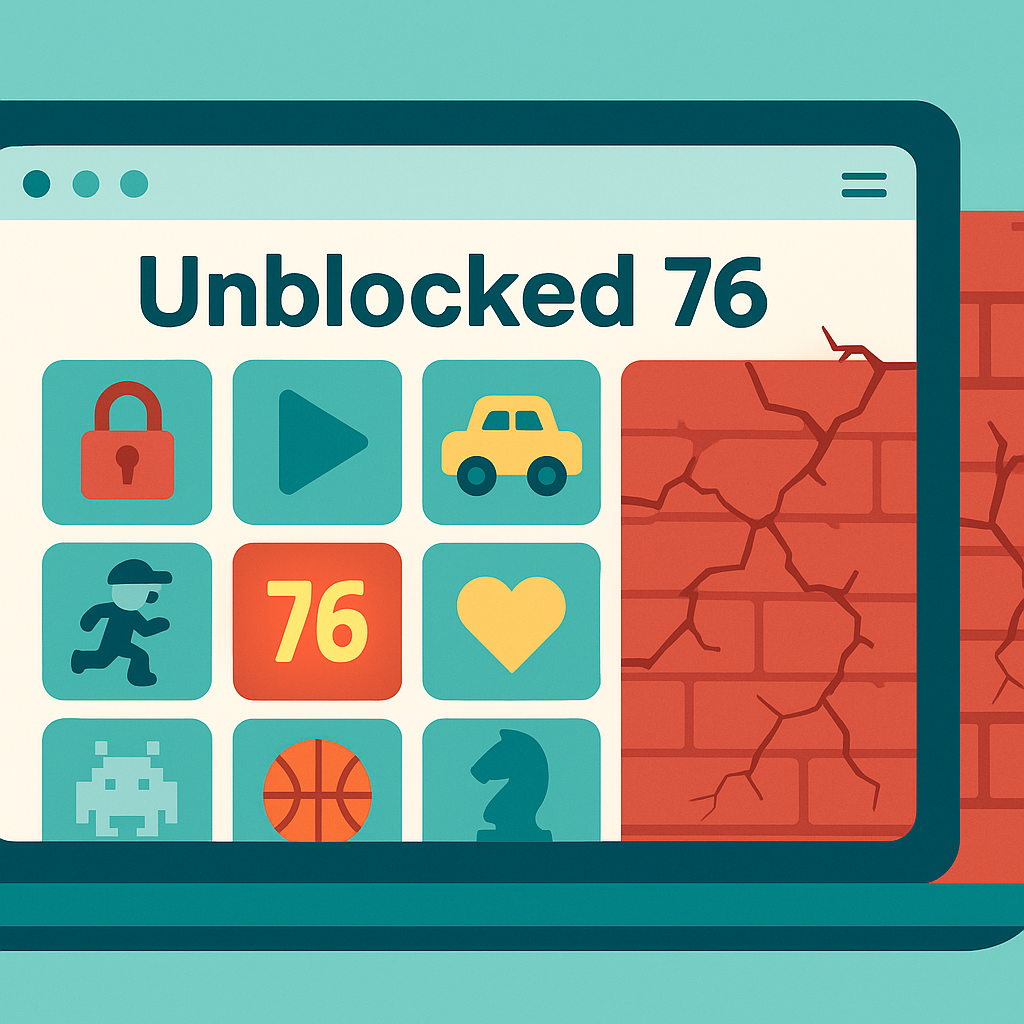
When a seventh-grader whispers try unblocked games 76 across a row of Chromebooks, it isn’t just mischief; it’s a tiny, improvised network experiment. The phrase has become shorthand for any page, portal, or mirror where simple browser games still load on a filtered device. The specific address morphs constantly, but the idea holds: there’s always another door.
This is not a story about one website. It’s about a phenomenon that happens to wear the label unblocked games 76 in many hallways and Discord chats. Like a pop song that keeps getting remixed, the hook stays the same even as the beats change. Administrators try to mute it. Students find the next version. Everyone claims to be sick of the tune, yet it’s back on the charts by lunchtime.
Below is a ground-level view of how unblocked games 76 took root, why it refuses to vanish, where the real risks hide, and what a practical, human-centered response looks like.
What “unblocked games 76” actually is (and isn’t)
The words unblocked games 76 are a label, not an identity. In one school it refers to a tidy grid of puzzle and platformer thumbnails. In another, it’s a pared-down list of titles that pop open in new tabs. Elsewhere it’s a look-alike mirror with the same color scheme and barely any text. The common thread is simple: the page loads on a device locked down with school or workplace filters—at least for a while.
What unblocked games 76 isn’t:
-
It isn’t a VPN or a privacy tool. It’s just a webpage (or many webpages) serving games that run natively in the browser.
-
It isn’t a single operator or official brand. It’s a magnet for clones because the phrase is easy to remember and easy to search.
-
It isn’t inherently malicious. Much of it is ordinary HTML5 entertainment. The trouble arrives through the ad stack, tracking scripts, copycat imitations, and the behaviors students adopt to keep up with the trend.
The brand-like clarity of the phrase creates a paradox: the stronger the label becomes in conversation—search unblocked games 76—the easier it is for new, unrelated sites to draw traffic by adopting the name. That’s why blocking a single URL rarely ends the story.
Why unblocked games 76 keeps winning the attention contest
1) Chromebooks, meet frictionless games.
School devices, especially Chromebooks, are web-first. That means any small, well-optimized game written in HTML5 or WebGL runs fine in a tab. No installers. No admin prompts. No complicated onboarding. For students, a two-minute break is as easy as a click.
2) The social currency of “what still works.”
Being the kid who knows the current working address for unblocked games 76 is a form of status. It’s not about the games alone; it’s about the discovery loop—finding, testing, sharing, and moving on when a mirror gets blocked. The game can be mediocre; the hunt is the fun.
3) Filters that target nouns, not context.
Most school filters categorize domains or match keywords. A site that looks like a generic page about shapes or homework can slip through until it’s popular enough to trigger the block list. Mirrors exploit that lag.
4) Micro-breaks matter.
Attention is a muscle. Long days of digital instruction make short mental palate cleansers appealing. Absent sanctioned alternatives, unblocked games 76 becomes the tap-to-escape button.
Inside the machinery: how portals come and go
A typical unblocked games 76 page looks simple but is designed for resilience.
-
Static grids, dynamic homes: The visible part is a static grid of embedded game canvases. The invisible part is the agility of the hosting: throwaway domains, subdomains on generic platforms, or content delivery networks that are too broad to block without collateral damage.
-
Minimal persistence: No accounts, little storage. Games save progress locally (if at all), which keeps friction low and accountability lower.
-
Ad tech roulette: Some mirrors run lightweight banners; others pile on aggressive ads or pop-unders that redirect to yet more mirrors when a block arrives.
-
Copy-paste portability: Because the content is mostly stock HTML5 titles sourced from around the web, spinning up a new instance is trivial. The catalog travels intact from one host to the next.
This structure means the defenders are always playing catch-up. A block today triggers two mirrors tonight. By the time an IT team updates the list, the herd has already migrated.
The student perspective: five minutes, fifteen hearts, zero patience
Ask a middle-schooler why they opened unblocked games 76 and you’ll often hear a version of the same answer: “I finished early.” The short session length is the point. You can fit a puzzle between an exit ticket and the bell. The tab sits small in the corner, silent, disposable.
There’s also peer culture at work. A student who finds a working mirror becomes a micro-celebrity for an afternoon. They trade links, share screenshots, and build mini-lists. None of this signals malice. It signals a desire for autonomy—however tiny—in a day crowded with instructions.
The teacher perspective: attention tax versus actual teaching
From the front of the room, unblocked games 76 is an attention tax. Teachers can spend minutes corralling tabs when a new mirror spreads. Over-blocking, however, can cost instructional time too; when filters clamp down on entire hosting platforms, legitimate reading links and examples mysteriously break.
In practice, teachers become the early warning system. They notice “that teal grid” suddenly appearing on multiple screens. They send the URL to IT. The speed at which schools turn those sightings into live blocks often determines whether the afternoon is calm or chaotic.
The IT perspective: physics beats absolutism
School IT departments balance three constraints:
-
Accuracy: Over-blocking kills instruction. Under-blocking invites chaos.
-
Scale: Hundreds or thousands of devices, dozens of classrooms, multiple grade bands, one shared network.
-
Context limitation: Most filtering tools see hostnames and categories, not fine-grained intent. Two pages can look nearly identical to a filter while behaving very differently in a classroom.
That’s why the smartest IT teams treat unblocked games 76 as a recurring pattern rather than a single incident: build fast feedback loops with teachers, lock down risky browser features, and expect mirrors to keep coming.
The risks beyond “kids are distracted”
Distraction is obvious. The subtler risks deserve attention.
-
Malvertising and noisy redirects: Some mirrors rely on aggressive ad networks that push pop-ups, prompt for notifications, or herd users to unrelated pages that feel sketchy—even when nothing overtly dangerous occurs.
-
Impersonation: Because unblocked games 76 is a phrase, not a company, copycats can borrow the name to harvest clicks or collect data.
-
Fingerprinting and tracking: Third-party scripts collect metrics. On shared devices, that means a web of analytics that nobody in the classroom consented to.
-
Normalization of evasive behavior: The “always be hiding” posture—split-screening, flipping windows when someone walks by—erodes trust and becomes a habit that can follow students into other online spaces.
The economics: tiny attention, real money
Operating a mirror is cheap: a domain, a template, an afternoon curating thumbnails. Revenue comes from ad impressions and incidental traffic. Even if each visit lasts only a minute, volume adds up. The real asset isn’t code; it’s the phrase unblocked games 76 itself—easy to remember, easy to search, easy for cloners to appropriate. That’s why new pages keep appearing the moment old ones disappear.
Case sketches from the field
A suburban middle school: After lunch, a teal-and-orange grid ripples across seventh-grade laptops. The teacher flags one URL. The IT team blocks it within the hour, but two mirrors appear the next day with the same layout and a new header. The school adds a quick-report form—a single field for pasting URLs. Reports jump, disruption drops.
A small rural district: An over-eager blocklist accidentally takes down a popular teacher’s portfolio because it shares hosting with an unblocked games 76 clone. The district responds by enabling domain-level blocks with exceptions and publishes a short “why we blocked this” note to staff. The trust rebound is noticeable.
A large urban high school: The school pairs blocking with “choice breaks”—three-minute intervals with approved activities. Because the itch to play gets scratched openly, sightings of unblocked games 76 decrease. Students still look, but the urgency fades.
These sketches are common, not exceptional: the pattern persists, but so do the workarounds.
Legal and ethical lines
Most districts already have acceptable-use policies: no evasion tools, no attempts to bypass security, appropriate content only. Unblocked games 76 lives in a gray zone where the content is usually benign but the pattern—seeking and sharing mirrors to dodge rules—conflicts with policy. The ethical frame that resonates with students is simple: your choices shape the community. A quick break isn’t the problem; sneaking, distracting, and normalizing risky clicks is.
A practical playbook that works better than whack-a-mole
1) Teach the “why,” not just the “no.”
A two-minute mini-lesson on how ad networks follow you, why notification prompts are traps, and how redirects work demystifies the page—and drains its mystique.
2) Give sanctioned micro-breaks.
Attention rebounds when students can choose from vetted activities for three minutes between tasks. When the need for a break is acknowledged, the thrill of unblocked games 76 diminishes.
3) Harden the browser, layer the network.
Lock down unknown extension installs, disable pushy notification prompts, and prevent off-store app installs. Combine DNS filtering, category blocks, and manual URL lists. No single layer is perfect; together they blunt the spikes.
4) Make reporting effortless.
One field. Paste the URL. Done. Teachers shouldn’t have to write essays about what they saw. Rapid response builds trust.
5) Share fast, transparent updates.
A weekly “sites blocked, why we blocked them, and how to request exceptions” note keeps staff aligned and stops myths from taking root.
6) Invite student leadership.
Digital citizenship clubs can test sites, draft classroom norms, and advise peers. When students help draw the lines, they tend to respect them.
The workplace echo
Adults do the same thing—tiny games in quiet tabs during long virtual meetings—only with better poker faces. Corporate IT departments manage the behavior with acceptable-use policies, application control, and culture. The shared lesson: attention is a finite resource everywhere, and blunt prohibitions usually push the behavior sideways rather than stopping it.
Why the name survives even when the sites don’t
Search engines love durable phrases. So do teenagers. Unblocked games 76 is short, descriptive, and sticky. Even if specific pages die, the words remain a north star for curiosity: search it, find today’s mirror, pass it along. That resilience is the point. You can’t block a phrase. You can only make the behavior around it less rewarding.
A classroom reality check
Picture a rainy Tuesday near the end of the day. A teacher grants ten minutes for independent practice. Two students finish early and open a small tile-based game. Another student asks for the link. The teacher scans the room, recognizes the telltale color blocks, and says, “Screens half mast.” Tabs drop. After class, the teacher pastes the URL into the report form. Tomorrow morning’s staff note includes the block and a quick tip about turning off notification prompts.
No drama, no heroics. Just a community nudging behavior toward learning more often than not.
Guidance that fits each audience
For students:
-
Curiosity is a feature, not a bug, but protect your future self. If a site begs for notifications or extra permissions, it’s using you as the product.
-
If you need a break, ask. Most teachers will trade three honest minutes for sixty focused ones.
-
The “cool” part of unblocked games 76 is the hunt. Aim that energy at something you can show off proudly—modding a game, coding a small project, designing levels for classmates.
For parents and guardians:
-
Talk about the pattern rather than the page. “Why do these sites appeal?” beats “Never go there.”
-
Ask the school what the norms are so home expectations line up. Inconsistent rules sabotage everyone.
-
Model purposeful breaks. Kids copy attention habits more than rules.
For teachers and librarians:
-
Use the phenomenon as a teachable artifact. Compare a vetted game to a random unblocked games 76 title. Discuss ads, loading speed, and data requests.
-
Keep a small, rotating list of approved activities for early finishers. Treat it like a classroom center, not a secret.
For IT teams:
-
Favor lightweight controls that stop the worst behaviors at the browser level.
-
Publish a living FAQ: what’s blocked, how to request an exception, how to report a new mirror.
-
Measure success by classroom calm and teacher time saved, not by the length of a blocklist alone.
The road ahead for unblocked games 76
Three trends will shape what happens next:
-
Context-aware filtering: Smarter systems will analyze in-page content more effectively, catching mirrors faster without breaking legitimate resources. The goal isn’t omniscience, just better signal-to-noise.
-
Host platform policies: Generic hosting providers will keep tightening rules as they notice their services being used for mirrors. That will slow, not stop, the churn—mirrors migrate easily.
-
Normalization of intentional breaks: Schools embracing short, structured play or wellness windows will see fewer covert attempts to chase the latest unblocked games 76 link. The itch exists; the question is whether it’s scratched honestly or slyly.
Bottom line
Unblocked games 76 is best understood as a label that points to a moving collection of simple browser games. The appeal is low friction and social discovery, not high-end graphics. Trying to eradicate it entirely is like trying to squeeze water: the more pressure you apply, the more it slips sideways. A better approach combines layered technical controls with transparent communication and tiny, sanctioned breaks that respect the realities of human attention.
Students aren’t wrong to want a breather. Teachers aren’t wrong to want focus. IT isn’t wrong to protect the network. The path that works acknowledges all three truths—and refuses to be distracted by the myth that a single block can silence a very catchy tune.
Editor’s note (no links, just clarity)
This feature uses unblocked games 76 as a focus keyword because that’s the phrase circulating in classrooms and searches today. By the time the bell rings, the exact URLs may have changed, but the dynamics will look familiar. Understanding those dynamics—not chasing every new mirror—is how schools and families turn a noisy trend into a manageable, even teachable, part of modern digital life.