

Khalembo is the central topic of this story.
In Tribal: Bloody Beginnings — Book One, Khalembo enters the story as a sixteen-year-old warrior with the beauty of a prince, the smile of a predator, and enough power to destroy some of Nebu’s deadliest weapons. Yet beneath the title “Conqueror” is a child who spent thirteen years waiting for the family that left him behind.
Warning: This article contains major spoilers through Chapter 23 of Tribal: Bloody Beginnings.
Khalembo does not need a long introduction.
When he first appears in Chapter 15, the people surrounding him already understand that he is dangerous. Young warriors move out of his path without being ordered. Three Harpies watch him carefully. Deathwave stands nearby. Rimitorry looks at him with love, grief, and the knowledge that the little brother she remembers no longer fully exists.
Then Khalembo begins fighting.
Within a single morning, he humiliates three Harpies, defeats a Deathwave experiment, massacres forty-five trainees, manipulates Tribal law, wounds the proctor without technically touching him, and earns the title that will follow him through the rest of the story:
Khalembo the Conqueror.
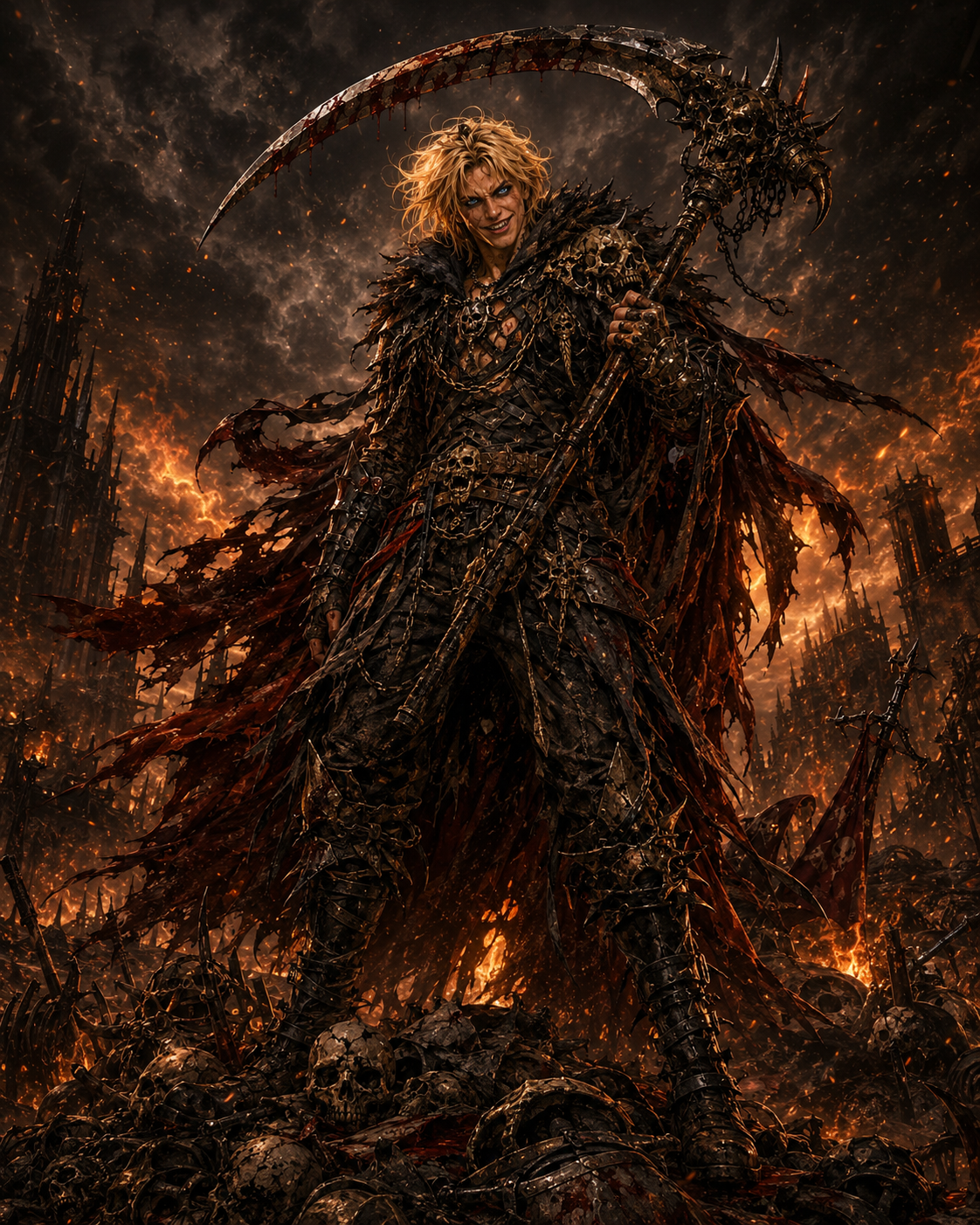
His violence is not merely effective. It is joyful.
He laughs during battle. He studies the fear in his victims’ eyes. He intentionally prolongs suffering when a quick death would be easier. He treats powerful warriors like toys placed in front of him for entertainment. Unlike killers who hide their pleasure behind duty, loyalty, or necessity, Khalembo openly embraces what violence makes him feel.
That makes him frightening.
It does not, however, make him simple.
Khalembo is also a son who fears disappointing his father, a brother who spent years waiting to be held again, and a child who constructed a monstrous identity because power was the only form of love consistently offered to him. He can shatter bones without hesitation, but a memory of a torn stuffed wolf can break through defenses no weapon has ever penetrated.
He may be one of the most violent characters in the Tribal Universe.
He may also be one of its most wounded.
Where Khalembo Appears in Book One
Khalembo’s major material is concentrated in four important parts of the novel.
His full introduction occurs in Chapter 15, “Khalembo the Conqueror.” This chapter establishes his appearance, childhood abandonment, relationship with Rimitorry, scythe mastery, percentage-based power demonstrations, cruelty, tactical intelligence, and the moment Conri Tora formally gives him his title.
He returns as a central combatant in Chapter 18, “Assault on Gia: Sakori’s Fury.” Here, Khalembo confronts his older brother Sakori, reveals the emotional damage caused by thirteen years of separation, fights Terra’s lieutenants, and finally faces his mother, Utrea.
In Chapter 22, “I Always Knew,” he helps expose the conspiracy surrounding the First Conri Tora, punishes the elder who assisted in Kavumo’s possession, threatens the ancient parasite, and meets the real Kavumo for the first time.
His final major Book One appearance comes in Chapter 23, “The Nightmare.” Khalembo shows genuine fear of the completed Deathwave, tries to protect his siblings, uses one hundred percent of his strength, suffers his first devastating defeat, and joins the younger generation in a desperate collective battle.
Together, these scenes tell a complete introductory arc.
Khalembo enters the book believing conquest proves his worth. He ends it sitting alone after discovering that even his full strength is not enough to protect the people he does not want to admit he loves.
The Son of Conri Tora and Queen Utrea
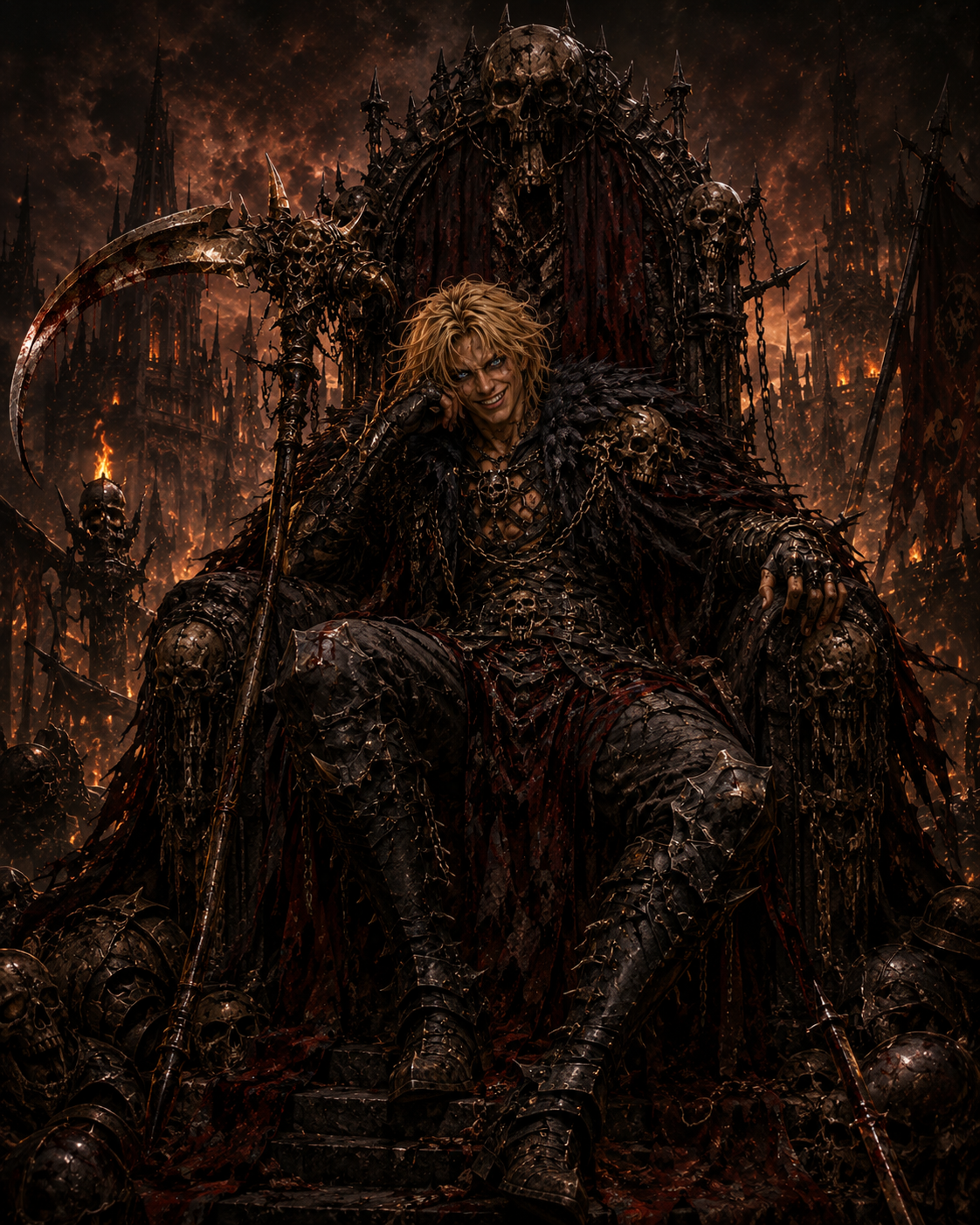
Khalembo is the son of two of the most powerful people in the known Tribal world: Conri Tora, the Dark Alpha of Nebu, and Queen Utrea of Gia.
That heritage alone places enormous expectations upon him.
Conri Tora is a survivor of the Thirteen Chambers and Murder Island, one of the legendary Five, and the warrior who eventually becomes the Dark Alpha. Utrea is also one of the Five, a ruler, strategist, conqueror, and warrior capable of standing against Conri when almost no one else can.
Khalembo inherits something from both.
From Conri, he appears to receive his hunger for battle, terrifying physical power, emotional control, and ability to turn violence into authority.
From Utrea, he inherits fire, intelligence, pride, and an unwillingness to accept a life defined by weakness.
Kavumo recognizes the resemblance after finally being freed from sixteen years of possession. He tells Khalembo that the boy reminds him of Utrea when she was young—before kingdoms and wars transformed her into a queen. Khalembo does not reject the comparison. He calls his mother a monster, places himself and his father in the same category, and admits that he respects her precisely because of what she has become.
For Khalembo, “monster” is not always an insult.
It can be recognition.
It can mean someone survived what should have destroyed them and emerged powerful enough to make the world pay attention.
The Child Left Behind
Khalembo’s defining wound occurs when he is three years old.
Utrea leaves Murder Island after winning her Calling. Rimitorry and Sakori also leave. Khalembo remains behind with Conri Tora, the Commander, the Bote, Doctor Polezah, his uncles, and the other products of the island.
From an adult perspective, the separation is governed by rules, survival, political necessity, and the island’s merciless system.
From Khalembo’s perspective, his family simply leaves.
He is too young to understand a Calling. He does not understand why some people are permitted to escape while he must remain. He cannot comprehend kingdoms, tribal obligations, or the strategic decisions being made around him.
He only understands absence.
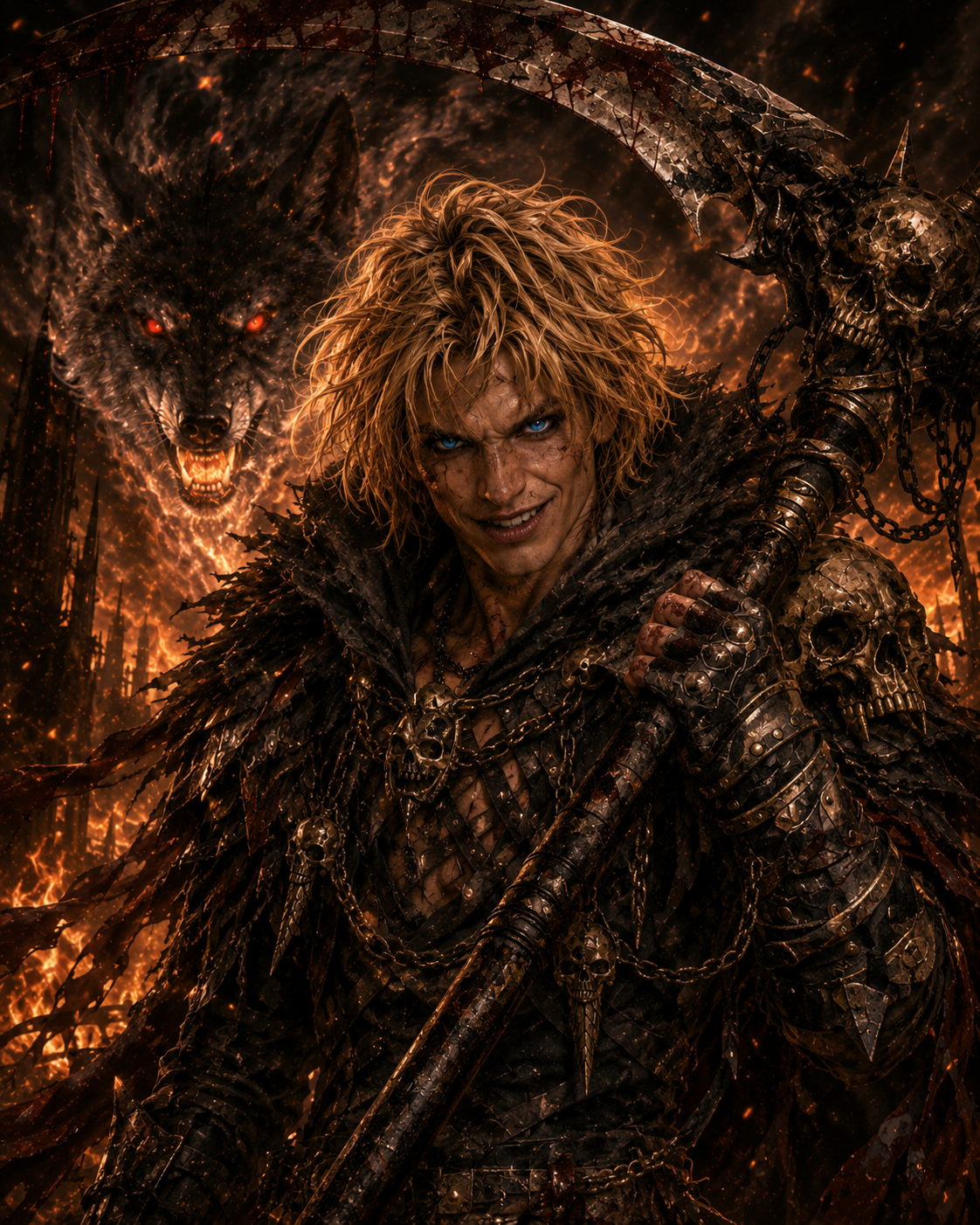
Before the separation, Khalembo carried a grey stuffed wolf with one damaged ear. He would grab Sakori’s shirt whenever his older brother passed. Sakori would lift him, and Khalembo would rest his head on his shoulder until he fell asleep.
The night before Sakori left, that ritual happened one final time.
Sakori held the sleeping boy for approximately an hour but did not wake him to say goodbye. He knew that looking into Khalembo’s eyes might destroy his resolve to leave. He believed that remaining on the island would result in both of them dying.
Sakori’s choice may have saved his life.
It also became the central abandonment of Khalembo’s childhood.
For years afterward, Khalembo continued reaching for people’s shirts. He looked for someone else to lift him. He waited for another shoulder.
No one picked him up.
That small detail explains more about Khalembo than the bodies surrounding him ever could.
He did not begin life wanting to become the Conqueror. He began as a child looking for the physical reassurance that someone was still there. When comfort never returned, he replaced attachment with strength.
If no one would hold him, he would become too powerful to need anyone.
If his family could leave him, he would make himself impossible to forget.
Thirteen Years on Murder Island
Khalembo spends thirteen formative years surrounded by people shaped through extreme violence.
His father does not raise him in an ordinary home. He is raised within the culture that created Alphas, Botes, Commanders, Harpies, and Deathwaves. Every relationship is filtered through power. Every lesson teaches survival. Every weakness becomes something another person might exploit.
The result is not simply an unusually well-trained teenager.
Khalembo becomes what prolonged exposure to Murder Island produces when a child never receives a normal life afterward.
Rimitorry visits him when possible. She tells him that she spent seven years returning secretly, bypassing guards and bargaining with Harpies for brief periods with her little brother. Her efforts matter. They preserve a connection between them and prove he was not completely forgotten.
But intermittent visits cannot replace daily care.
Khalembo remains in Conri’s world. He learns his father’s rules, the Doctor’s rules, the Commander’s rules, the island’s rules, and the expectations attached to his bloodline. Everyone tells him what he must become.
Very few people ask who he wants to be.
When Rimitorry finally asks him that question, he does not describe a dream, home, role, or future.
He says he wants to show her what he is.
Then he draws his scythe.
That is the tragedy of Khalembo’s childhood: by sixteen, his idea of identity has become inseparable from demonstration. He does not believe existence is enough. He must prove himself through overwhelming violence.
He does not merely want his family to see him.
He wants them to witness what leaving him created.
Khalembo’s Appearance
Khalembo is approximately sixteen years old during his major Book One scenes.
He has lighter, almost golden-brown skin, dark wavy hair, high cheekbones, full lips, and a face described as nearly too beautiful for the world surrounding him. He is tall for his age, already roughly the proctor’s height, with a developing frame suggesting he will become even more physically imposing.
His most distinctive features are his eyes.
They are intensely blue—not grey or faded, but the color of deep ice or glacial water. Their beauty contrasts with the hunger behind them. Other characters repeatedly associate those eyes with coldness, madness, and something far older than the boy’s actual age.
He normally dresses in black.
Unlike Deathwave’s protective and functional armor, Khalembo’s clothing is loose and casual. He does not appear to dress as though he expects opponents to touch him. His appearance communicates confidence before he begins moving.
Across his back rests his signature weapon:
A scythe.
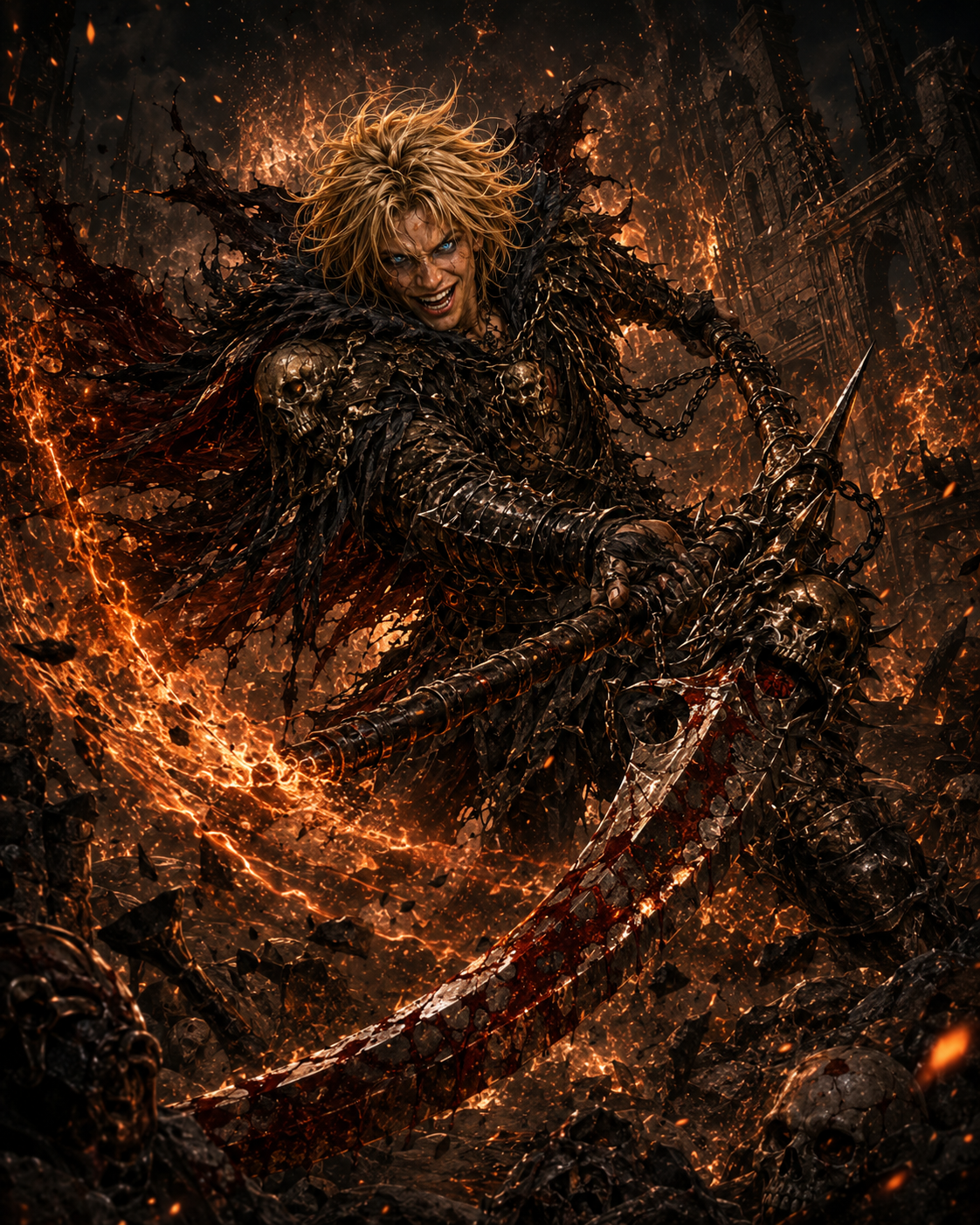
The weapon would be awkward for an ordinary fighter. Its size, reach, curved blade, and rotational requirements create openings that a conventional sword does not. Khalembo’s speed and control eliminate those disadvantages. In his hands, the scythe becomes an extension of his body.
Its wide arcs allow him to control groups. Its shaft becomes a striking weapon. Its hook can capture limbs or weapons. Its unusual movement patterns make him difficult to read, even for opponents trained against nearly every standard weapon.
Khalembo does not merely carry the scythe because it looks frightening.
His entire combat style has been constructed around making an impractical weapon inevitable.
The Birth of the Conqueror
Khalembo earns his title during the training-tower massacre in Chapter 15.
The demonstration begins with three Harpies.
These are not inexperienced fighters. Harpies are conditioned weapons trained for combat, infiltration, seduction, protection, and assassination. They are designed to move without hesitation and to obey through pain.
Khalembo faces all three simultaneously while claiming to use approximately thirty percent of his power.
He does not simply defeat them.
He dismantles the psychological foundation of what they have been made to be.
He breaks a wrist. He controls position and distance. He lifts one Harpy by the throat with a single arm. He intentionally brings his blade down beside another woman’s face instead of killing her. He forces the supposedly emotionless weapons to confront fear.
Khalembo is fascinated by the moment conditioning fails.
He wants to see the person beneath the weapon. He studies the instant when certainty becomes terror and the victim remembers that death can reach them.
He leaves the Harpies alive, but not from mercy.
Death would end their fear.
Khalembo wants them to carry it.
After breaking the three Harpies, he challenges Deathwave 201, the incomplete version of Project Deathwave introduced earlier in the book.
Deathwave has superior conditioning, enhanced senses, extreme reflexes, weapon mastery, and a history of never losing. Khalembo nevertheless treats him as a more interesting inconvenience rather than a true equal.
At roughly forty percent, Khalembo forces Deathwave to work.
At fifty percent, he puts him on the ground.
He defeats a creation intended to represent the Doctor’s greatest achievement and then pauses with the scythe at Deathwave’s throat. More important than the physical victory is Deathwave’s reaction: he experiences fear.
Khalembo values that fear almost as much as victory itself.
Then Thirty-Two interferes.
Using a Gia mind-control spell, the proctor takes command of forty-five trainees and sends them against Khalembo at once. Thirty-Two intends to test Khalembo, test his own spell, or perhaps punish the arrogant child before him.
Instead, he gives Khalembo exactly what he has been seeking.
A challenge.
Khalembo raises his effort from sixty percent to seventy, eighty, and finally ninety percent as the warriors surround him. The room shakes under the release of his power. His scythe becomes nearly impossible to follow. He catches a blade between two fingers, breaks it, and kills its owner with the fragment. He uses one trainee’s body as a weapon against others. He kills men attempting to escape and studies the time required for them to bleed out.
When ten remain, they beg for mercy and explain that they were being controlled.
Khalembo already knows.
He kills them anyway.
The battle ends with forty-five trainees dead, three Harpies broken, and Deathwave defeated. Khalembo is breathing hard, showing that ninety percent has genuinely pushed him, but he remains standing and pleased with what he has accomplished.
He then asks Conri Tora to give him a name.
Conri answers:
Khalembo the Conqueror.
The title becomes more than recognition. It becomes the identity Khalembo has spent thirteen years trying to build.
How Powerful Is Khalembo?
Khalembo is among the strongest members of the younger generation in Book One, but his power requires careful interpretation.
He is not the strongest being in the Tribal Universe.
He is not stronger than Conri Tora, Utrea, Kavumo, Knargz, Zuberi, Nim’Raza, or the completed Deathwave. His encounters with Sakori and Deathwave 47 also complicate his claim that he is unquestionably the strongest sibling.
What Khalembo demonstrates is extraordinary combat dominance against conventional and enhanced opponents.
His current abilities include:
- Extreme speed
- Exceptional physical strength
- Ka’ru-enhanced movement
- Advanced reflexes
- High pain tolerance
- Extraordinary weapon control
- Heightened senses
- Group-combat mastery
- Psychological warfare
- Tactical manipulation
- Precise control over how much power he releases
- The ability to fight many opponents without losing awareness of the battlefield
Unlike Thirty-Two, Khalembo does not currently demonstrate a large library of Tribal Bible spells.
His power is primarily internal.
Ka’ru reinforces his body, movement, reactions, presence, strength, and ability to continue fighting. At ninety percent, his release is strong enough to shake the training room and disturb the people surrounding him. His physical strength allows him to crush hands into unrecognizable shapes, break major bones with casual strikes, lift adults by the throat, catch weapons, and move bodies as though they weigh little.
His speed may be even more dangerous than his strength.
Khalembo repeatedly changes position faster than trained opponents can visually process. He can move behind someone during an attack, enter the space between two coordinated warriors, and manipulate multiple people before they understand where he has gone.
He is also highly perceptive.
During the training-tower massacre, he recognizes that the trainees are under outside control. He senses that Thirty-Two cast the spell. Later, he instantly recognizes the emotional relationship between the proctor and Rimitorry and turns that bond into a weapon.
His statement that he can smell Rukhan’s wife and children on him also suggests highly developed senses, although the scene leaves room for the possibility that part of this is psychological intimidation.
Most importantly, Khalembo can measure his output.
His percentage announcements indicate deliberate Ka’ru regulation. He knows approximately how much of himself he is releasing and can increase that amount as the opponent demands more.
That control is remarkable for his age.
Khalembo’s Percentage Scale
Khalembo’s percentages provide a useful, though imperfect, guide to his strength.
Thirty percent: The Harpies and Terra’s lieutenants
He begins his fight against three Harpies at approximately thirty percent. He breaks them without killing them and appears to remain fully in control.
Later, he uses thirty percent against Odrik and Rukhan, two of Terra’s most respected lieutenants. They attack together with coordinated lethal force. Khalembo moves between them, destroys Odrik’s legs, pulverizes both of Rukhan’s hands, and decapitates them.
This suggests thirty percent is already enough for Khalembo to overwhelm several elite warriors.
Fifty percent: Deathwave 201
Khalembo raises his output while fighting the incomplete Deathwave.
At approximately fifty percent, he puts Deathwave on the ground and places the scythe against his throat. Deathwave 201 has enhanced senses, extensive conditioning, and advanced combat abilities, yet he cannot properly read Khalembo’s movement patterns.
This establishes Khalembo above the incomplete Project Deathwave subject.
Ninety percent: Forty-five trainees after earlier fights
Khalembo reaches ninety percent while surrounded by forty-five armed trainees after already breaking the Harpies and defeating Deathwave 201.
He kills all forty-five.
The number is impressive, but context matters. The trainees are ambitious and trained, yet inexperienced. Their attacks are also controlled by Thirty-Two rather than guided by their own best judgment. They have numbers but lack the experience of a Bote, Commander, Alpha, island survivor, or completed Deathwave.
Nevertheless, killing forty-five combatants while surrounded remains one of Book One’s most significant younger-generation feats.
Seventy-five percent: Sakori
Khalembo publicly claims to use seventy-five percent against Sakori.
This is not a clean measurement.
Sakori is already severely injured after fighting an army, the Commander, Deathwave, Harpies, and Conri Tora. More importantly, the brothers secretly cooperate. Khalembo needs to appear loyal to their father, while Sakori needs to survive.
Khalembo strikes hard enough to make the performance convincing, but intentionally avoids killing him.
The encounter therefore demonstrates control and emotional restraint more than it proves comparative strength.
One hundred percent: Deathwave 47
Khalembo’s greatest limitation is revealed against the completed Deathwave.
Deathwave 47 is not the younger, incomplete version Khalembo previously defeated. He is an older, fully developed weapon conditioned since childhood and equipped with decades of observation. He has watched Khalembo since the boy was nine, studying his mistakes, weaknesses, habits, and fears.
Khalembo attacks with increasing force until he declares one hundred percent.
Deathwave blocks everything with one hand.
He then defeats Khalembo almost instantly, leaving him bleeding from numerous wounds and unable to rise.
This loss establishes a clear ceiling for Book One Khalembo. He is extraordinarily strong, but raw power and talent cannot compensate for an opponent who possesses superior experience, preparation, conditioning, and knowledge of his fighting style.
During the later collective attack, a healed Khalembo joins Sakori, Rimitorry, Eshari, Zafira, Zinetha, and Thirty-Two against Deathwave. Together, they force the completed weapon to fight seriously, but Khalembo is again disarmed and knocked down.
The Conqueror is powerful.
He is not invincible.
His Mastery of the Scythe
Khalembo’s scythe is central to both his image and his fighting philosophy.
A sword is designed for direct combat. A dagger is intimate. A spear controls distance. A scythe carries another meaning: harvesting.
Khalembo moves through groups as though they are fields placed before him.
The weapon’s symbolism suits his title. He does not view himself as a defender responding to threats. He sees land, armies, and opponents as things waiting to be claimed, cut down, or transformed into proof of his superiority.
His technique is unusually fluid.
He uses the blade for decapitation and deep cuts, but also uses the shaft to attack joints, throats, knees, and balance. He changes grip, distance, and angle constantly. The curved blade makes his next attack difficult to predict because a defensive movement against one end may create an opening for the other.
His style is also theatrical.
Khalembo understands that fear can weaken opponents before the killing strike. The wide movement of the scythe, the sound it makes, and the sight of blood along its curved edge become part of his psychological assault.
The weapon does not merely kill.
It announces who has arrived.
Violence as Pleasure
Many characters in Tribal: Bloody Beginnings kill.
Khalembo is distinguished by his honesty about enjoying it.
When he destroys Odrik and Rukhan, he explains the difference between ordinary killers and conquerors. A common warrior may call his violence duty, victory, loyalty, or glory. Khalembo sees himself as something more truthful.
He enjoys the process.
He likes the fear preceding death. He watches bones break. He encourages screams. He pays attention to the warmth and movement of blood. He intentionally gives victims time to understand what is happening.
His punishment of the elder in Chapter 22 follows the same pattern.
The elder helped the First Conri Tora maintain control of Kavumo for sixteen years. Khalembo therefore chooses a punishment reflecting duration, intent, and betrayal. He destroys the hands that recorded lies and the body that helped preserve the conspiracy before asking his father for the formal sentence.
Conri orders death.
Only then does Khalembo remove the elder’s head.
This scene demonstrates something important: Khalembo’s cruelty is not random.
He constructs meaning around it.
He believes betrayal should be answered. He believes suffering can become a form of accounting. He turns the victim’s body into a symbolic representation of the crime.
That does not make his actions moral.
It makes them deliberate.
Khalembo is not out of control when he tortures people. He is often more controlled than anyone else in the room.
Khalembo’s Intelligence
It would be a mistake to view Khalembo as only a physical monster.
He is highly intelligent.
After discovering that Rimitorry loves Thirty-Two, Khalembo does not directly attack the protected proctor. Tribal law gives the proctor special status, making an intentional assault potentially punishable.
Khalembo instead grabs Rimitorry, redirects the movement of her chakram, positions Thirty-Two in its path, and creates an apparent accident.
The blade wounds Thirty-Two.
Rimitorry believes she caused it.
Khalembo technically never strikes him.
He immediately explains the deeper effect: Rimitorry will become afraid of accidentally hurting Thirty-Two again. Fear will make her cautious around him. Caution will slow her reactions and create weakness.
In seconds, Khalembo turns affection into guilt, guilt into hesitation, and hesitation into a future tactical advantage.
Conri recognizes what his son has done.
He praises Khalembo for bending the law without openly breaking it.
This moment reveals the kind of conqueror Khalembo may become. He does not need to win only through strength. He understands rules, appearances, emotions, and technical innocence.
An enemy may protect the body.
Khalembo attacks the relationship.
Khalembo and Conri Tora
Khalembo’s relationship with his father is built from admiration, dependence, fear, competition, and the desperate need for approval.
Conri is the parent who remained.
He is also the person most responsible for what Murder Island turned Khalembo into.
Khalembo performs for him. He asks permission to fight Sakori. He announces his percentages where his father can hear them. After the training-tower massacre, he asks Conri to name him. The title “Conqueror” matters because it comes from the Dark Alpha.
Conri does not respond to Khalembo like an ordinary father.
He evaluates him as a potential weapon and successor.
When Khalembo kneels after earning his title, he does not appear as a powerless subject. He kneels like someone acknowledging the only person currently above him. Father and son measure one another as much as they embrace their relationship.
Yet Khalembo’s loyalty is not complete emotional security.
In Chapter 23, Conri sends Deathwave 47 to retrieve Reonniz and authorizes the killing of anyone who interferes. Khalembo steps forward and warns that Deathwave may kill his siblings.
Conri’s response is effectively that they should stay out of the weapon’s way.
Khalembo turns white.
For perhaps the first time, the possibility that his father’s mission may destroy his family becomes more important than appearing fearless.
He does not openly defy Conri in the throne room.
But he later stands with those siblings against Deathwave.
That decision represents one of the most important developments in his Book One arc. Khalembo begins the story trying to prove he deserves to stand beside his father.
He ends it risking himself beside the family his father is willing to sacrifice.
Khalembo and Rimitorry
Rimitorry is both Khalembo’s sister and one of the few people who refuses to treat the Conqueror as his complete identity.
She remembers the child beneath the performance.
She remembers him holding her shirt. She remembers his tears. She visits him despite the political and physical barriers separating them. When he invites her to fight, she refuses—not because she believes she cannot survive, but because she will not participate in the destruction of her little brother.
Her refusal destabilizes him.
Khalembo knows how to respond to aggression. He understands fear, pride, challenge, and bloodlust.
Unconditional love gives him nothing to strike.
Even after the massacre, when Rimitorry looks at what he has become, she tells him that she still loves him. For a moment, the entire Conqueror persona breaks and the sixteen-year-old boy becomes visible.
Then jealousy and insecurity return.
Khalembo sees that she loves Thirty-Two. He realizes that she has given emotional space to someone else while he remained on the island waiting for her visits. His response is cruel, calculated, and personal.
He uses Rimitorry’s own weapon to wound the man she loves.
This does not mean Khalembo feels no love for her.
It means his love has been shaped by abandonment into possession. He wants her safe, but he also wants her loyalty to prove that he matters more than the people she found after leaving him.
Their future relationship may depend on whether Khalembo learns that love can expand without replacing him.
Khalembo and Sakori
Sakori reaches a part of Khalembo no one else can reach.
Their confrontation during the assault on Gia begins as a potential battle between two of the strongest brothers in the younger generation. Sakori has just survived an almost impossible sequence of fights. He has faced armies, Harpies, Deathwave, the Commander, and Conri Tora. His body is nearly destroyed, yet he remains standing.
Khalembo is impressed.
He calls Sakori magnificent and acknowledges him as the strongest among them.
But Sakori refuses to attack.
Instead, he speaks about their childhood.
He tells Khalembo about the stuffed wolf, the torn ear, the shirt-grabbing, and the way the boy used to fall asleep on his shoulder. He finally explains why he left without saying goodbye.
The memories destroy Khalembo’s performance.
He asks why Sakori did not wake him. He admits that he waited. He reveals that after Sakori left, he continued trying to repeat their ritual with other people, but no one responded.
Then Khalembo throws away his scythe and runs into his brother’s arms.
For a brief moment, he is no longer a warrior.
He is three years old again.
He grabs Sakori’s shirt and begs him not to leave.
This is Khalembo’s most important scene because it proves the Conqueror is not an empty shell. The original child still exists beneath thirteen years of conditioning. He can cry, forgive, trust, and choose not to kill.
The brothers then cooperate to deceive Conri.
They stage a violent battle. Khalembo wounds Sakori badly enough to make the performance convincing but refuses the final execution. He brings the scythe down beside Sakori’s head and quietly tells him to return when he reaches full strength.
Khalembo risks his father’s wrath to preserve his brother.
That choice may represent the first genuine fracture between the Conqueror and the Dark Alpha.
Khalembo and Utrea
Khalembo’s feelings toward his mother are colder and more complicated.
When Utrea arrives during the assault on Gia, he addresses her with restrained hostility. She says she always comes for him. Khalembo rejects the claim because, from his perspective, she did not remain when he needed her.
Utrea explains that she could not return to Murder Island after her Calling.
Khalembo hears rules again.
His entire life has been governed by rules explaining why other people could not give him what he needed.
He believes Utrea chose the children who left over the child forced to remain.
Nevertheless, he respects her strength. Later, after Kavumo compares him to a younger Utrea, Khalembo openly acknowledges that she is a monster and means it with admiration.
Their relationship therefore contains resentment without emotional indifference.
Khalembo wants his mother to recognize what he became after she left. He may hate her absence while still valuing the parts of himself inherited from her.
Khalembo and Kavumo
Kavumo is Khalembo’s uncle, but the real Kavumo is absent throughout nearly all of Khalembo’s childhood.
The First Conri Tora possesses Kavumo and uses his body for sixteen years. Khalembo grows up seeing his uncle’s face but never knowing the person trapped beneath it.
When the truth is exposed, Khalembo takes the betrayal personally.
He threatens the ancient parasite and promises that one day he will become strong enough to find it on Murder Island. His words are not merely loyalty to the Tribe. He is angry over the relationship stolen from him.
He also punishes the elder partly in Kavumo’s name.
After Kavumo is freed, their first genuine exchange is surprisingly human. Khalembo jokes about his uncle appearing smaller than expected. Kavumo responds with humor despite his weakened state.
Kavumo then confronts him about enjoying the elder’s suffering.
Khalembo answers honestly.
Rather than immediately condemning him, Kavumo recognizes what the island created. He compares Khalembo to Utrea and admits that watching the boy has reminded him of what all the island survivors carry within themselves.
Khalembo welcomes him home and expresses interest in actually knowing him.
This relationship may become essential in later books.
Kavumo understands both restraint and monstrosity. He may be able to guide Khalembo without pretending that the boy’s hunger does not exist.
Khalembo and Thirty-Two
Khalembo initially views Thirty-Two as a curiosity.
He calls him the failed proctor who can read, treating him as socially and physically beneath the great Tribal warriors. Yet Thirty-Two becomes responsible for the challenge that allows Khalembo to discover his ninety-percent level and earn his title.
Khalembo does not punish him for controlling the trainees.
He thanks him.
To Khalembo, the forty-five deaths are not an atrocity committed because of the proctor’s mistake. They are the greatest gift he has received: an opportunity to reach a level he had never needed before.
Their relationship is therefore founded on a dangerous mixture of fascination and hostility.
Thirty-Two is growing through magic. Khalembo is already a physical monster. Both can increase their Ka’ru through conflict. Both are deeply connected to Rimitorry. Both are products of Tribal systems that reduced children to tools.
Khalembo also understands how to exploit Thirty-Two’s emotional weaknesses long before the proctor fully understands Khalembo’s.
They could eventually become rivals, reluctant allies, or mirrors of what each man might become.
Khalembo’s Greatest Fear: Deathwave 47
Khalembo defeats Deathwave 201 and uses that victory as proof of his superiority.
The completed Deathwave destroys that certainty.
Rimitorry reveals that everyone fears Deathwave 47—including Khalembo. The boy attempts to hide that fear, but his physical reaction when Conri authorizes Deathwave’s mission exposes it.
During their direct confrontation, Khalembo attacks to protect Zinetha and his siblings. He escalates through his percentages until reaching one hundred.
Deathwave stops him with one hand.
The defeat is not only physical.
Deathwave tells Khalembo that he has watched him since age nine. He knows every mistake, weakness, and fear. He then rejects Khalembo’s identity, reducing the Conqueror to a child pretending to understand war.
Khalembo cannot rise afterward.
For someone whose entire self-worth is based on overwhelming power, this is devastating. The title earned through victory suddenly feels fragile. His full strength has been measured and dismissed.
At the end of the battle, Khalembo sits alone, staring into nothing.
When Nim’Raza says the younger warriors fought well because they survived, Khalembo quietly answers that they did not fight well enough.
The Conqueror has discovered a world beyond his dominance.
What he does with that discovery may determine his future.
He can respond by becoming more obsessed with power.
Or he can finally understand that survival, family, cooperation, and wisdom matter more than proving he can stand alone.
Is Khalembo Evil?
Khalembo performs evil acts.
He tortures, kills, manipulates, terrifies, and openly enjoys suffering. His victims’ pleas do not awaken ordinary mercy. At times, their fear makes the experience more pleasurable for him.
Calling him innocent would ignore the choices he makes.
Calling him incapable of humanity would ignore the rest of the book.
Khalembo loves his siblings. He protects Zinetha when Deathwave attempts to kill her. He worries about Reonniz, Rimitorry, Sakori, Eshari, and Zafira when his father sends Deathwave. He spares Sakori at personal risk. He cries in his brother’s arms. He wants to know Kavumo. He feels emptiness after gaining the title he believed would complete him.
These qualities do not erase his cruelty.
They reveal that cruelty is not the only thing inside him.
Khalembo is best understood as a child who learned that power was safety, performance earned recognition, and violence produced the attention that affection failed to provide consistently.
He is responsible for what he does.
He is also the product of adults and institutions that cultivated his worst instincts because those instincts were useful.
The moral question surrounding him is not whether he has done monstrous things.
He has.
The question is whether being made into a monster means he must remain one forever.
The Meaning of “The Conqueror”
Khalembo believes conquest means enjoying what others merely endure.
But his title contains a contradiction.
He can conquer warriors, rooms, battlefields, and fear. He can make Harpies crawl and Deathwaves experience uncertainty. He can destroy elite lieutenants at a fraction of his strength.
What he cannot conquer is the three-year-old boy still waiting on Murder Island.
Every major emotional relationship returns him to that abandoned child.
Rimitorry’s love cracks his mask.
Sakori’s memories destroy it.
Utrea’s presence reopens the wound.
Kavumo reminds him of family stolen before he understood what was missing.
Conri’s approval temporarily fills the emptiness but never heals it.
Deathwave’s victory exposes how dependent Khalembo’s identity remains on being stronger than everyone around him.
The greatest conquest of Khalembo’s life may therefore have nothing to do with an army.
It may be the battle to reclaim himself from the person Murder Island taught him to become.
What Khalembo Could Become
By the end of Book One, Khalembo stands at a crossroads.
One path leads deeper into Conri Tora’s shadow.
On that path, Khalembo pursues greater percentages, harsher training, more kills, and absolute dominance. His defeat by Deathwave becomes humiliation to erase. His love for family becomes possession. His title becomes permission to take kingdoms, lives, and loyalty through force.
That Khalembo could become one of the Tribal Universe’s most dangerous villains.
The other path begins with Sakori’s embrace.
On that path, Khalembo recognizes that his siblings returned for him. He learns that strength can protect instead of merely conquer. He accepts guidance from Kavumo, challenges his father’s control, and turns the power created by Murder Island against the systems that continue sacrificing children.
That Khalembo would not suddenly become gentle.
He would remain violent, frightening, proud, and capable of terrible things.
But he could become something more complex than his father’s weapon.
He could become the family’s most dangerous protector.
There is also a third possibility: Khalembo may move between both paths. He may save his siblings while destroying everyone else. He may rebel against Conri without rejecting conquest. He may become an antihero whose love is real but whose methods remain horrifying.
That may be the future most consistent with the boy introduced in Book One.
Khalembo does not need to become harmless to become human.
He only needs to decide that the people he loves are more important than the title he was given.
The Conqueror Is Still a Child
Khalembo’s first great public victory leaves forty-five bodies across a training floor.
His first great defeat leaves him sitting alone in the Dark Forest.
Between those two moments, the reader sees nearly every part of him.
The beautiful sixteen-year-old with glacial blue eyes.
The scythe wielder who moves too quickly to follow.
The warrior who defeats Harpies at thirty percent and an incomplete Deathwave at fifty.
The killer who enjoys blood, screams, and the destruction of supposedly powerful men.
The strategist who manipulates Tribal law and turns love into weakness.
The son seeking his father’s approval.
The child who resents his mother for leaving.
The brother who throws away his weapon and begs Sakori never to abandon him again.
The nephew who punishes the people responsible for stealing Kavumo.
The frightened boy who knows Deathwave 47 may kill his family.
The Conqueror who reaches one hundred percent and learns that one hundred percent is still not enough.
All of these versions are Khalembo.
None can be removed without making him less interesting.
He is neither simply an unstoppable warrior nor merely a traumatized child. He is what happens when enormous natural potential, a legendary bloodline, abandonment, Ka’ru, Murder Island, and a father like Conri Tora are placed inside one developing person.
Khalembo is already powerful enough to massacre armies.
He is still young enough to change.
That combination may make him more dangerous than any percentage can measure.
The Tribal Universe has many killers. It has Alphas, Commanders, Harpies, Deathwaves, mages, and ancient beings capable of possessing bodies across generations.
But Khalembo represents something different.
He is a monster who knows he is a monster.
He is proud of it.
He is wounded by it.
And somewhere underneath the black clothing, the blue eyes, the blood-covered scythe, and the title proclaimed before a room full of bodies, a three-year-old boy is still holding a torn grey wolf and waiting for someone to pick him up.
That boy has not disappeared.
By the end of Tribal: Bloody Beginnings, he may be the only person capable of saving Khalembo the Conqueror from himself.